
If anyone has ever listened to my radio show in the past four semesters with WUSC, knowing my favorite band is not difficult. I speak constantly on my love for the rock band, The Strokes, and consistently cite them as the foundation for my music taste as a whole. In the direct aftermath of the announcement of their first album in six years, Reality Awaits, The Strokes took to arguably the largest stage possible in the world of music festivals, Coachella. On weekend two of their performance on the main Coachella stage, right before Justin Bieber, in front of thousands of onlookers, The Strokes decided to make a statement.
While finishing their set with the song “Oblivious”, the band displayed a sequence of photos on the hundred-foot screens behind them. This photo montage showed off decades of CIA intervention in other countries, specifically focused on US government intervention in Central and South America. The performance concluded with video footage of the current conflicts in Gaza and Iran with Julian Casablacas, lead singer of The Strokes, finishing the song's lyrics, “What side are you standing on?”.
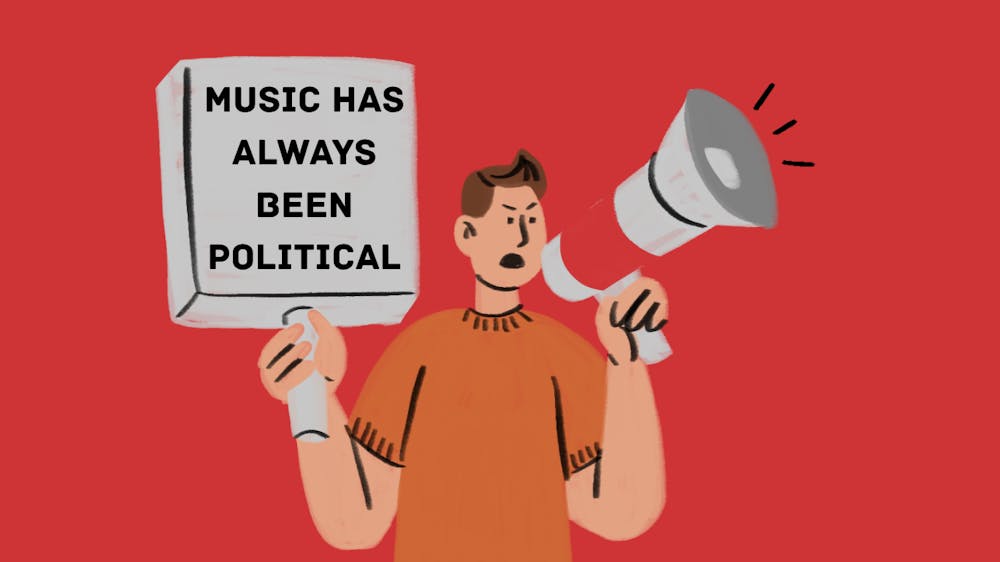
This small part of The Strokes’ set was one of the most buzzworthy parts of weekend two of Coachella. Though I will avoid discussing the politics and meaning of this message, as everyone is entitled to their own opinion, I do plan on critiquing one common opinion I hear regarding this performance, which is that highly political messaging such as this has no place in music. That just couldn’t be further from the truth.
Music has been political for as long as the artform has been in the forefront of society. Dating back to the Revolutionary War, “Free America” protested the acts put in place by the British government. The works of Bob Dylan and Buffalo Springfield defined a generation of protests against the administrations at that time. Music is one of the most unique forms of activism as people can connect with it, acting as either a background score or driving force for protest. The Strokes' performance did not break the status quo. Rather, it simply continued what musicians have been doing for centuries, and to me, that is commendable.