Return to WUSC
I’m not sure of the year. It could have been 1993 or '94. I received an email from the University that WUSC-FM was inviting alumni to do shows on the station over the homecoming weekend. I thought that would be fun. I was now a graduate of the College of Engineering with a degree in electrical engineering. I had left SCETV in 1991 but was still involved with the production of the PBS show, “Firing Line Debates with William F. Buckley”. I had not set foot in a radio studio since 1979, except briefly at SC Educational Radio. I was told that the station was down the hall from where it was in the '60s.
So, I walked up the ramp at Russell House University Union and over to the elevator. When the door opened, I pushed the button for the second floor. The doors closed then opened again; I was already on the second floor! I must have looked very confused because a custodial worker came over and asked where I was going. I told her that I was looking for WUSC-FM and she said that the station was on the third floor. “So it moved up a floor?” I remarked and she told me that the floors had been renumbered during the renovation of the building in the 1970s. When I arrived at the third floor, I discovered that the hall on the west wing was more than twice as long as I remembered it to be and the station had moved from the right side of that hallway to the left and all the way to the end of what was the student media wing.
I entered the open door of the control room and was greeted by a rather laid-back student-DJ and his girlfriend. They showed me where the controls for the turntables, cart machines and CD players were and where the remote control for the transmitter was. It was the last days of the required transmitter meter readings, so I signed the transmitter log and took a set of readings. I also signed the program log which contained no underwriting announcements that needed to be played. I had brought along my case of CDs of non-Top 40 music because I knew that they had a rule that the DJs could not play any song that had been on the Top 40 in the past 40 years.
I sat down at the console, inserted my first CD and selected the track I wanted to play. I made the top of the hour ID, introduced myself as an alumnus and started the song. I sat there orienting myself to the world, noting that I could look through the window separating the master control room and the production control room, and then through the brightly sunlit windows that overlooked the much-larger-than-I-remembered patio behind the building. By the time I brought my attention back inside, the student DJ and his girlfriend had left the station. I was on my own, hoping that the next DJ would show up on time.
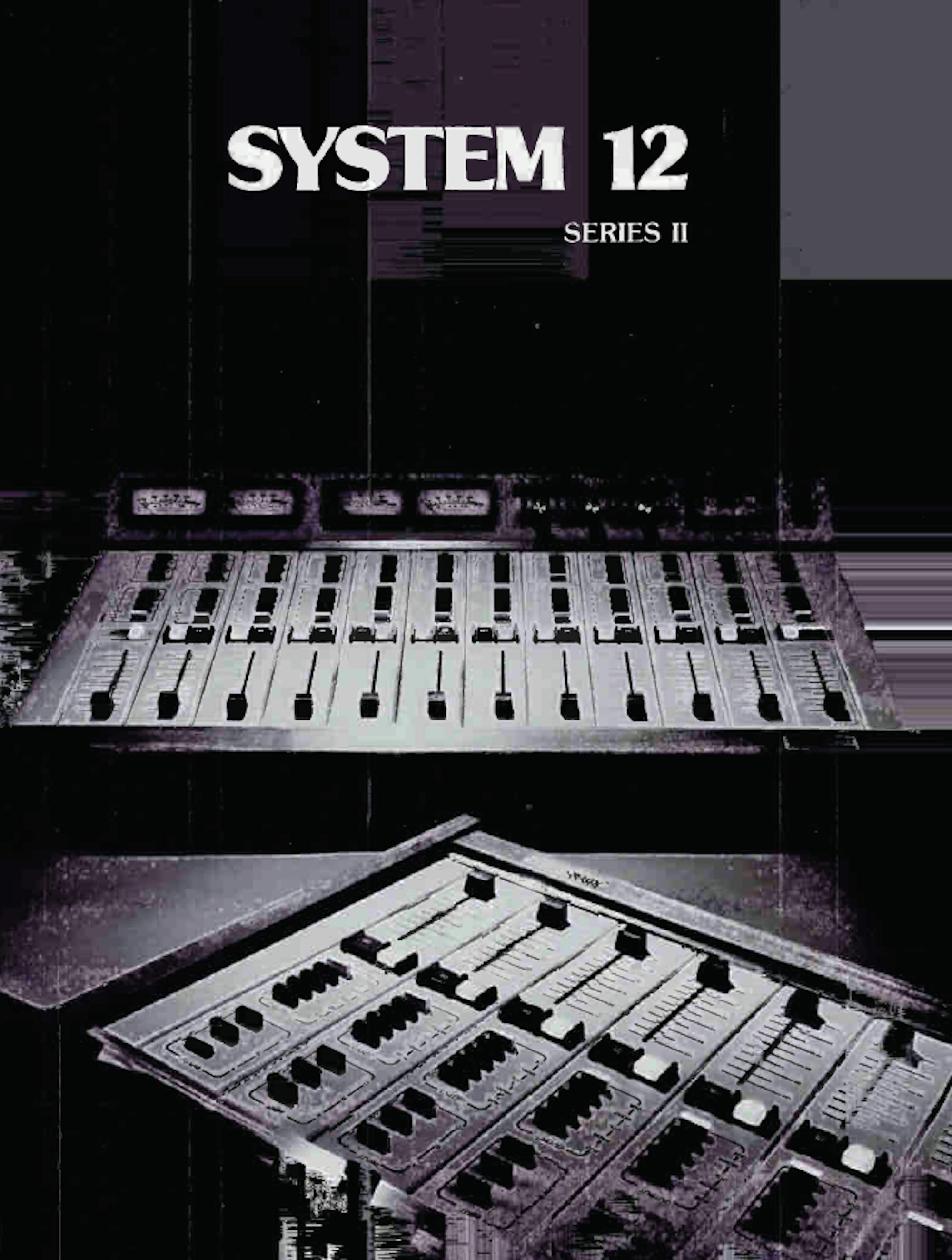
At this time, this was the type of audio console used in master control at WUSC-FM.
Now for those of you who are familiar with the current configuration of the studio suite, there were changes made between then and 2007 when I next entered the station. The production studio became the master control studio and the master control studio was remodeled into a smaller production studio. A larger lobby space and the engineering office were repurposed into a booth-sized studio that is being used for the HD-2 World Music broadcasts, and finally, the station manager’s office was converted to an equipment room where the automation computers, audio processors, required radio and EAN monitors, engineering workshop and the second auxiliary transmitter are located.
In 2007, I was invited to the annual meeting of the WUSC-FM Alumni Association at the old “The Whig” restaurant and bar in the basement on the corner of Main and Gervais where the MOXY Marriott is today. I did not expect to see anyone I knew but I was surprised to run into John George, a longtime radio friend who had worked at both WCOS and WIS Radio at different times than me. John was a broadcast technician with a radio consulting firm of his own and was the technical support guy for WUSC-FM. There was another WUSC alum there: Bob Chapman better known as "DJ Gamecock", who played a pivotal role in my return to radio. I also met Scott Lindenberg who was the USC Director of Student Media at the time. Scott was on a mission. He wanted the alumni who lived in town to assist during breaks when the station was often in automation for days on end. I said I was interested and gave him my contact information.
I signed up for an alumni shift for the following day. This time the student DJ stayed in the studio with me. She asked if I would like to run my own board and I said "yes". She patiently showed me how to run the AudioDesigns D-75 board, the three CD machines and the AudioVault automation system, so I could play the required public service announcements. There was a program log but no transmitter log because the FCC had approved the use of “automatic transmitters” that primarily required the remote control to turn them on and off. Being the old geek that I am, I still checked the remote control to be sure the station was operating within the frequency and power limits.
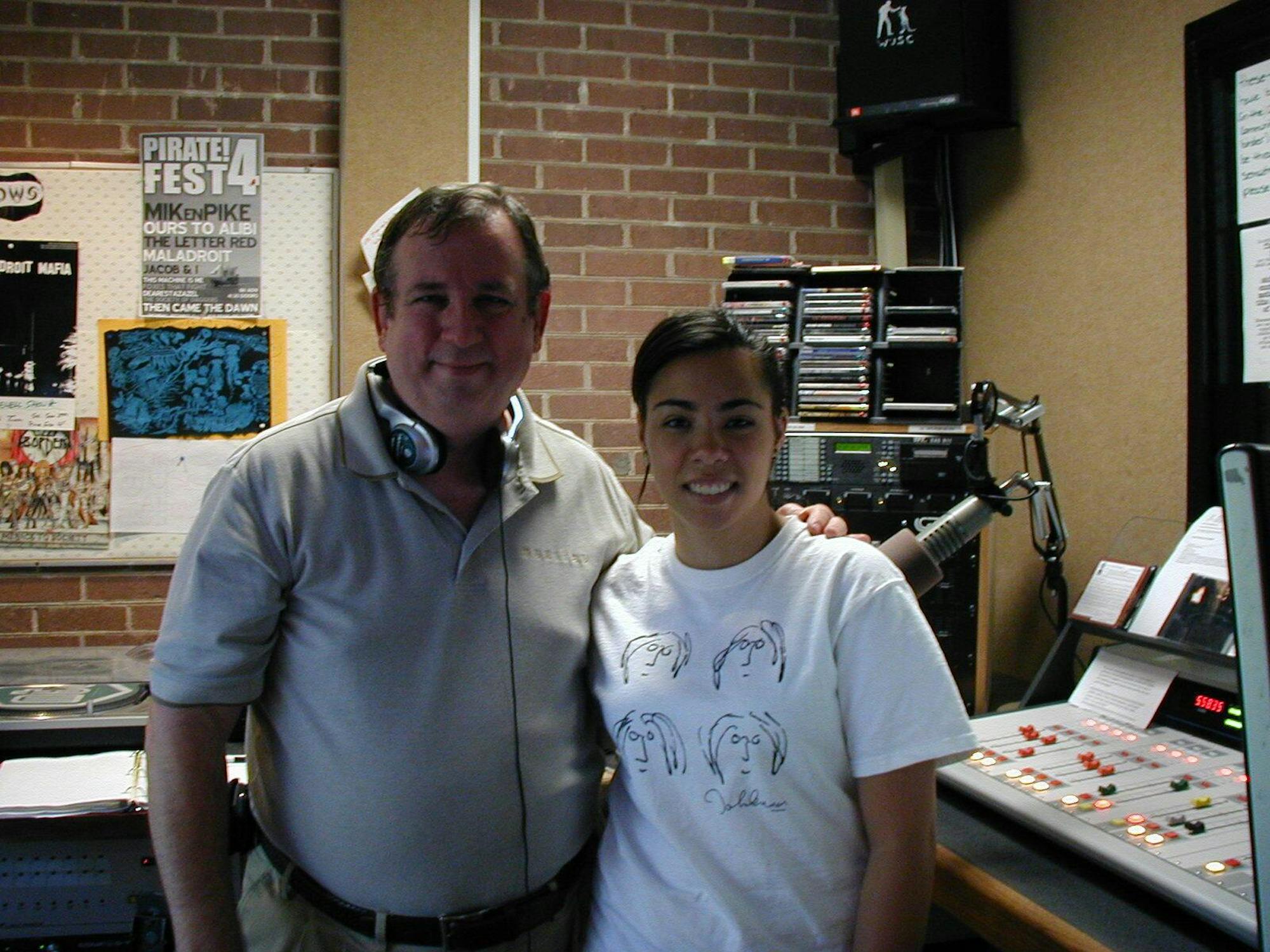
This is a picture of that DJ who trained me on that AudioArts D-75 Console, Marci Bozek (now Aplin) and me. She became WUSC-FM Station Manager and now works as a Senior Marketing Analyst for Live Nation.
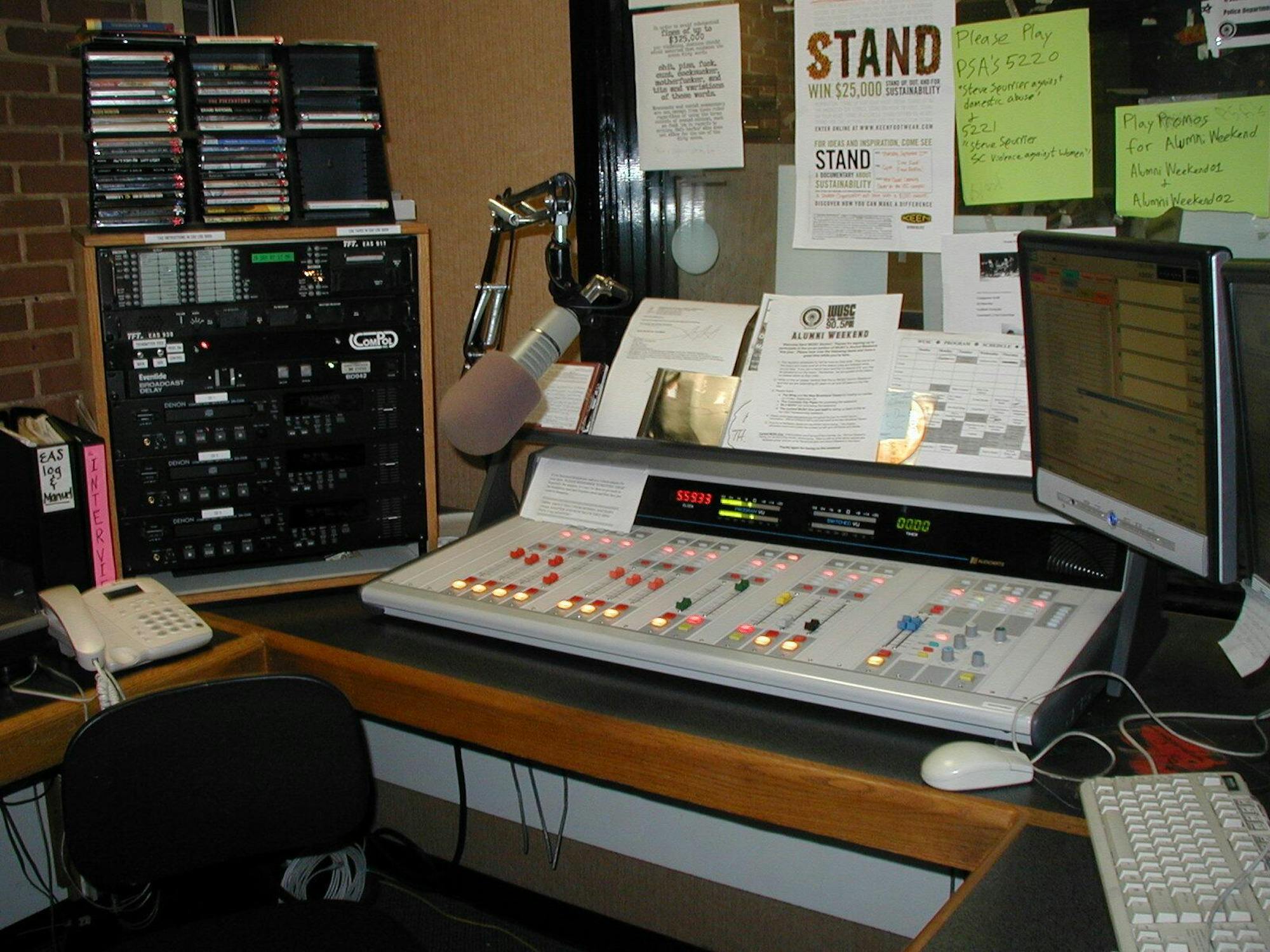
This is the WUSC-FM studio configuration in 2007 with the AudioArts D-75 console, three Denon CD players on the left and the AudioVault automation monitor on the right.
I got a call from Scott a few days later, asking if I was interested in covering a shift during Thanksgiving break. I readily agreed and was assigned a shift between two student DJs, beginning a period where I was among a small cadre of alumni who covered shifts where there were few students available. Those shows went on every break between 2007 and 2009. As we were getting ready to schedule up 2009 Christmas break, Scott told me that he wanted to create “anchor slots” on the station. These slots would be filled with DJs that were in those same times semester to semester and year to year. He wanted some stability in a schedule that was constantly changing from semester to semester, dependent on students' class schedules. I had been doing Monday mornings from 9 a.m.-noon during breaks. During the regular schedule, shows were two hours long, not three, so we agreed on 10 a.m.-noon on Mondays. So, I did the 9 a.m.-noon slots that semester break and on January 10, 2010 I began my string of 10 a.m.-noon Monday shows that remains unbroken, save for holidays and COVID 19. Over 800 shows!
I was assigned a “Guest” Carolina Card used for access to the station and was granted 24/7 access so that I could back John George on technical issues. The name of those early shows was “50’s, 60’s and Soul". The format was electric blues, soul and R&B. I was vigilant to keep my songs different from Clair DeLune’s very popular Tuesday evening show, "Blues Moon”. I delved more into R&B and southern soul.
There were changes to my show coming in the near future.

I was born in a great radio town, Jacksonville, FL. So it was only natural that I joined WUSC (AM at the time) in my first semester in 1963. I went on to a career in commercial radio and television in Columbia, working with WCOS-AM & FM, WIS-TV, WIS Radio, SCETV and PBS. I'm retired now, giving back since 2010 to the station that started my career, WUSC-FM. If you did the math, you would know that I celebrated the 60th anniversary of my first radio show ever in November 2023.