
Transition to IT
When I arrived at SCETV, the accounting and payroll department operated a Burroughs mini-computer to manage the books. There was no computer system in the engineering department, but we were in the planning stages for our Instructional Television Fixed Service (ITFS) system. ITFS is a microwave system that is used to deliver instructional television material to every public school in the state. In order to accomplish this, Charlie Bowers needed to calculate the required heights for every microwave dish on the hundreds of towers that would be built in the next few years. He had access to digital terrain map data of the state of South Carolina at the University of South Carolina that he would use to determine these heights. He wrote a Common Business Oriented Language (COBOL) program that would perform the thousands of calculations against the map to determine each microwave path’s minimum requirement for the dish height at each end. There were literally several thousands of these paths to calculate.
Instead of purchasing or renting a standard terminal to the IBM System/360 mainframe computer at USC, similar to the ones placed in the different colleges, Charlie suggested moving SCETV’s engineering department into the digital age by purchasing a Digital Equipment Corporation (DEC) PDP 11/44 mini-computer. It was installed about the same time that I joined the engineering staff in 1980. Initially, he hired a data processing graduate from Kent State University to start off the fledgling computer department, managing both the hardware and software. He stayed with us for a couple of years before moving back up to the Midwest. Our next computer systems manager did not have any hardware experience, so Charlie asked me if I would take over the management of the system software and all the hardware that included the PDP 11/44, the terminals, printers, and cables. I think he chose me because I had IBM mainframe experience from my engineering courses and DEC experience with the PDP-8M at WIS Radio.
At the same time, most of my normal engineering duties were relieved with the exception of the CMX/Orrox editing systems which were also controlled by PDP-11 computers. I had just finished a two-week course at CMX systems in Sunnyvale, CA, which included the basic system management functions. I was still based in the engineering shop, however. During this time, we significantly expanded the use of computers by placing over 50 DEC terminals and printers in administrative spaces and introducing WordPerfect word processing, spreadsheet and presentation functions, first in the executive suite, and later in the other departments across the SCETV campus.
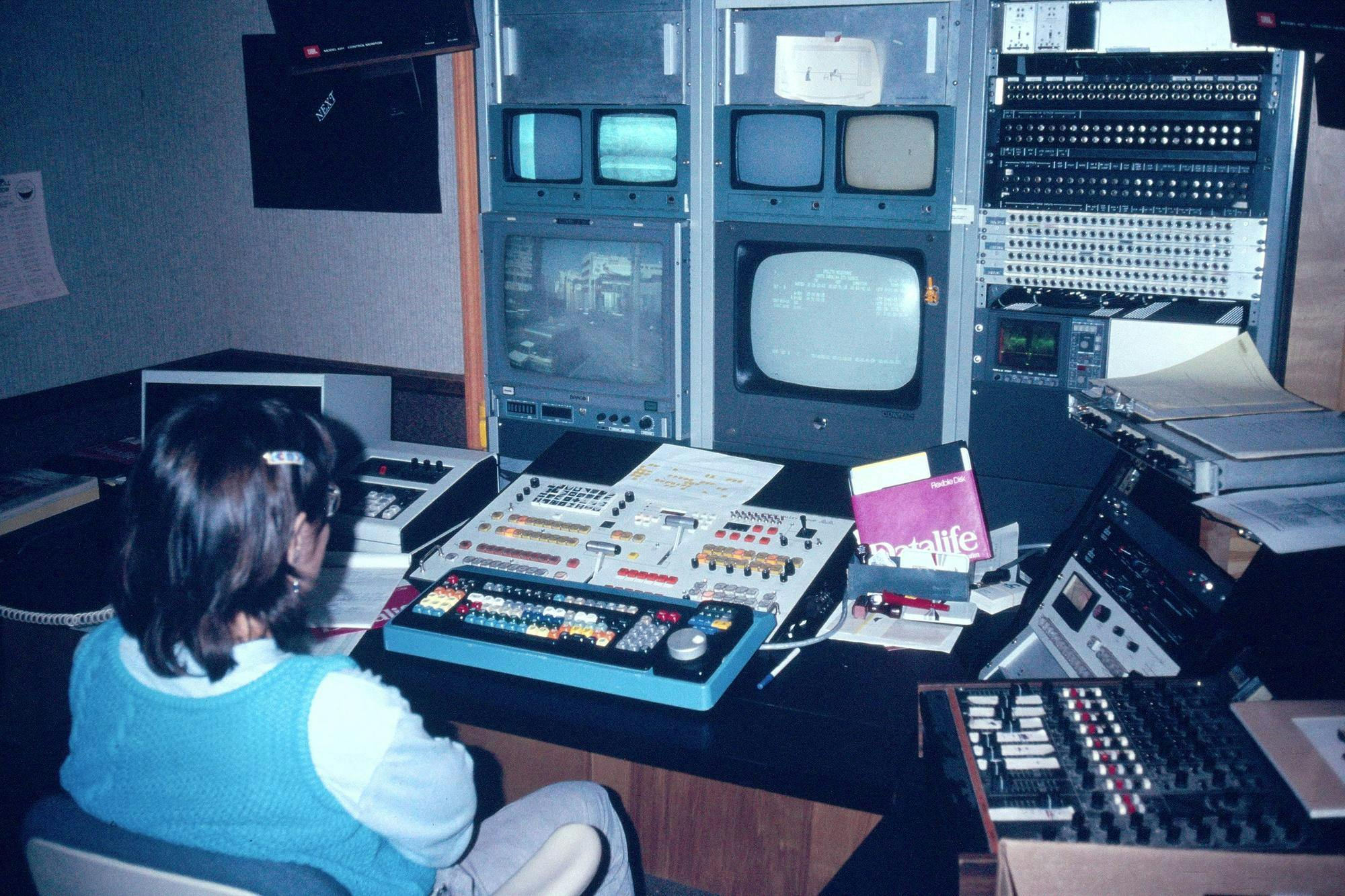
In 1985, our second computer manager, Chris Weiss, took a better paying job at one of the
big data houses in the city and I told Charlie that I was ready to take over all the engineering
computer operations. I was moved out of the engineering shop and assigned an office upstairs
in the executive suite. I shared that space with two well-known South Carolina women, Carolyn Holderman, wife of USC President Jim Holderman, and Nancy Moore Thurmond, wife of South Carolina Senior Senator Strom Thurmond. They were both wonderful to work with and I got to know their families as well--- including Nancy Thurmond and Nancy Holderman, who later crewed for me on my sailboat during the Lake Murray Yacht Racing Association (LMYRA) spring and fall racing seasons.
At this time, my daily involvement with broadcast operations ended, but I soon found a way to involve the computer department with broadcast operations.
PBS and SCETV are public broadcasting operations and as such, do not sell commercials. PBS received a significant part of their funding from the federal government and the Corporation for Public Broadcasting. SCETV received theirs as a state agency with a portion of the state budget and a nonprofit called the ETV Endowment of South Carolina. At that time, twice a year, the Endowment and SCETV would produce a telethon that ran for a week in December and ten days in May. During these broadcasts, volunteer operators in studio phone banks would take pledges from the audience and enter their information on pre-printed forms. At the end of each pledge break, staffers would sum up the number of pledges to be able to announce the amount raised to date in the next pledge break. This was a very labor-intensive process and prone to error, mostly in getting credit card numbers copied onto the forms correctly. So, the Endowment staff would run the credit cards through a credit card machine through the bank to
determine if the numbers were correct. There was at least one incorrect credit card number recorded in each pledge break. They did this immediately to have the best chance of calling the person making the pledge on the phone to verify the number. Remember, this was before the internet, and the risk of exposing credit card numbers, but nonetheless, once the credit cards were run through the machines, we erased the card information.
Henry Cauthen, our founder and president, asked me if our computer system could assist with this process.
Using a system called DECForms and the programming language BASIC-PLUS, I created a system by which keyboard operators could keypunch the information taken by the phone bank operators from paper into the computer, calculate, and print out the totals for the on-air talent to read in the next pledge break. This program also created invoices to mail out the next day to those who pledged. We hired two to four interns each night to key in the pledges, print out the totals for the on-air talent, and at the end of the night, print out the invoices and stuff them into envelopes so the name and address of the person making the pledge could be seen through the plastic windows of the envelopes.
I later added three additional features to this program.
The first allowed us to display the totals on a terminal in the studio, in numbers big enough to catch with a camera. Initially, it showed the updates all at once so the on-air folks could have a “drum roll moment" as the numbers changed. Then later, to animate that feature so the numbers updated incrementally over a period of time, creating extra excitement during a live pledge break.
The second feature resulted from a conversation I had with one of our bank’s vice presidents. We were discussing the number of errors the pledge bank operators were making copying down the bank card numbers. He told me that there was a single algorithm used by all banks and credit companies to check if a credit card number was valid, not necessarily correct, but in a valid format. I signed a non-disclosure, and he sent me the algorithm. After that, we were able to catch every incorrect credit card number and send it back to the studio for verification. Even if I still remembered that algorithm, which I don’t, I’m still bound by that non-disclosure.
The third feature was to replace the display terminal in the studio with an IBM PC that could scroll the numbers much faster than the terminal could. This last was written on the PC using Visual Basic code that I wrote, and a genius bit of assembler code written by one of my programmers, David Kurlowich. When I left SCETV in 1991, that programmer took over the computer department and ran it for many years.
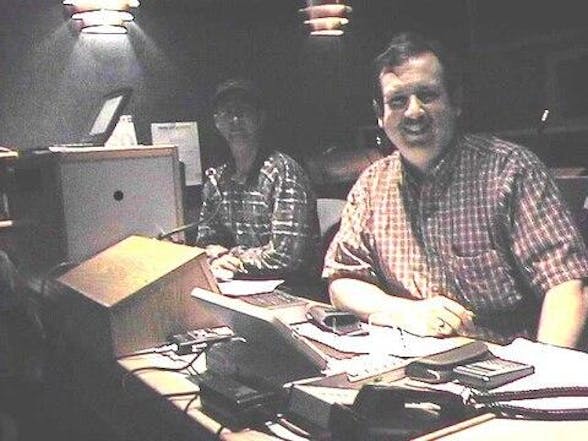
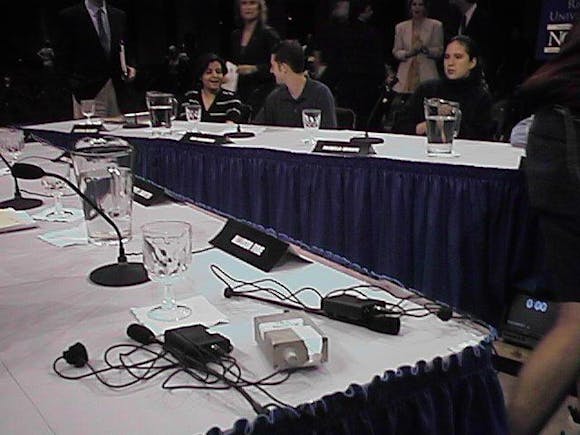
That snippet of code was instrumental in my becoming involved with the PBS Firing Line program until William F. Buckley retired in 1999.

I was born in a great radio town, Jacksonville, FL. So it was only natural that I joined WUSC (AM at the time) in my first semester in 1963. I went on to a career in commercial radio and television in Columbia, working with WCOS-AM & FM, WIS-TV, WIS Radio, SCETV and PBS. I'm retired now, giving back since 2010 to the station that started my career, WUSC-FM. If you did the math, you would know that I celebrated the 60th anniversary of my first radio show ever in November 2023.