
IT and Television Merge
William F. Buckley Jr. began a show called “Firing Line” at WOR-TV in New York City in 1966.
After 240 episodes, “Firing Line” moved to noncommercial television in May 1971, produced by South Carolina Educational Television (SCETV). In the early 80s, “Firing Line” added a series of two-hour debates that were shot exclusively at institutions of higher education, at irregular intervals, four or five times a year.
I remember one debate show in particular that was shot at Longstreet Theatre on the campus of the University of South Carolina. I was involved in the production of that show as part of the engineering department at SCETV. Guests on that show included some powerful political personalities. I remember that after that show, some of the panelists on both sides were complaining to William F. Buckley and the producer, Warren Steibel, that the opposition had more time at the debate podium than their team was allotted. This was despite the fact that the production team strove to keep the times equal.
A couple of years later, the misconception worsened, and Mr. Buckley and Mr. Steibel had a meeting with SCETV President Henry Cauthen to seek a solution. Henry, remembering what I had done to present the pledge data to the studios during the “Marchfest” and “Decemberfest” telethons, called me into the meeting. I told them that I could rewrite the IBM-PC part of the software to create a countdown clock that could be shared from the PC to a number of TV monitors on the set so that everyone involved could see what amount of time each debater had at the podium.
It took me about a week to develop a program using Microsoft’s Visual Basic and the assembler code written by fellow team member, David Kurlowich. Finally, the telethons could display a digital countdown clock with a small space at the bottom for the operator to set the time from which to count down, and some minimal controls: start, stop, reset to zero and a function to enter the minutes and seconds, up to 59 minutes and 59 seconds.
As it turned out, there was another debate show scheduled the next week and I was invited to demonstrate the clock to Mr. Buckley and Mr. Steibel who agreed that we should try it in the debate that week. I was sent a format sheet that was created by Tinka Tiemann of Producer’s Inc., the entity that was handling the production from their office across Cypress Street, just a few steps from my office. The format sheet was typical of most format sheets in that it had a start time and an end time for each element of the debate: opening and closing statements from the team captains, a segment for each member of the debate team, and opening and closing comments from the moderator, Michael Kinsley, who would later be one of the hosts on CNN’s show, “Crossfire”. I learned very quickly that doing time calculations was a lot harder than adding and subtracting. I found that the Radio Shack Realistic Tandy Calculator EC-495 worked well for my needs.
The demonstration went well and the day after the show’s taping, I was invited back to Mr. Cauthen’s office to meet with Mr. Buckley and Mr. Steibel. Mr. Buckley thanked us for the solution and asked Mr. Cauthen to assign me to the future debate program tapings. I was back in the thick of it.
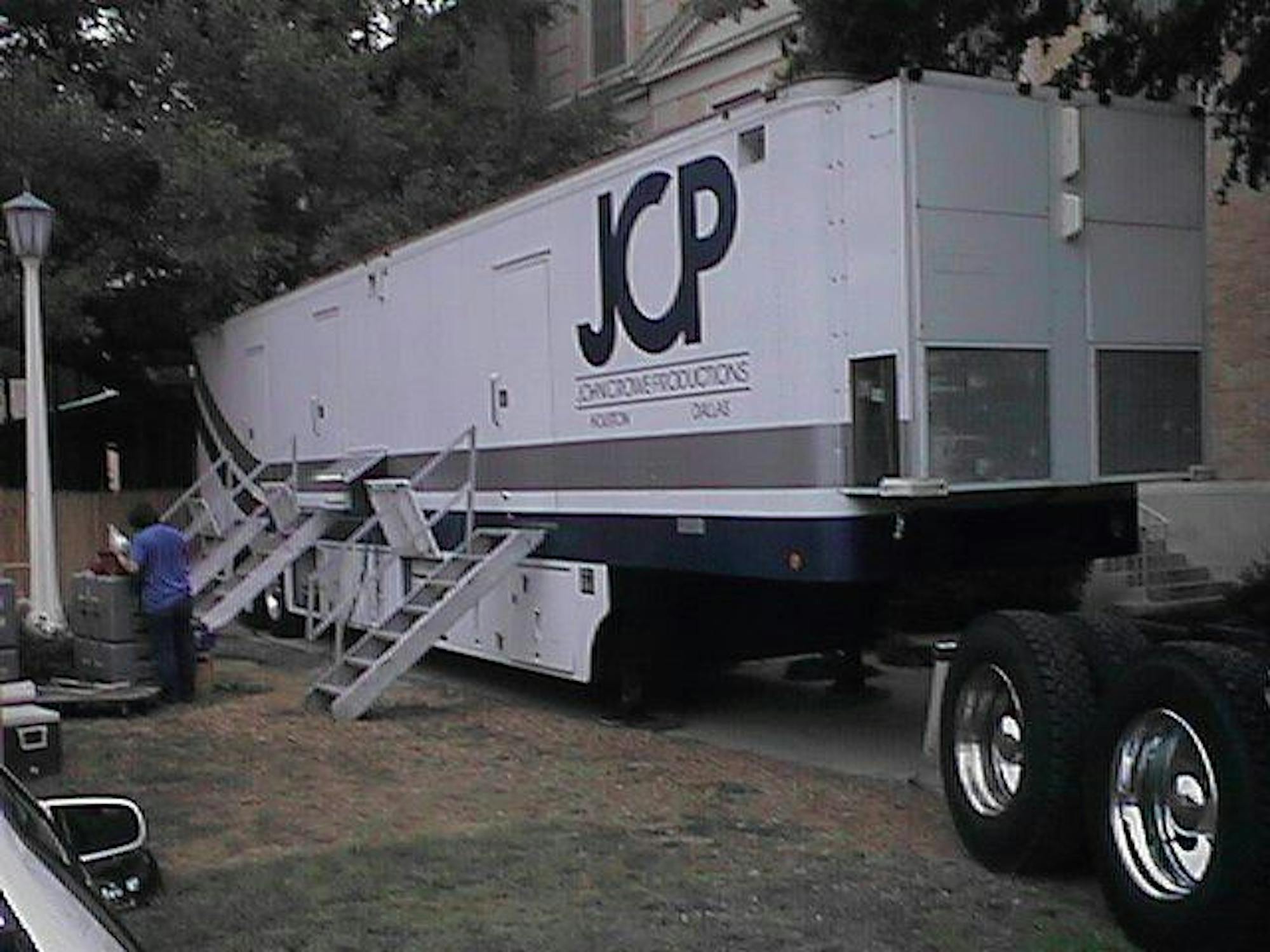
Four to six times a year, I’d board a plane to some college or university somewhere in the US. Some of the most memorable locations were Bard College in Upstate New York, TCU in Fort Worth, Saint Louis University, Seton Hall University, Ole Miss, the Cooper Union in NYC, on the very stage where the Lincoln-Douglas debates were held, and several universities in Boston. In South Carolina, there was Coker University, Furman and of course, the University of South Carolina.
In 1991, I decided to leave SCETV to pursue an opportunity at the South Carolina Water Resources Commission where I would have a chance to manage a local area network and connect to the internet, which I had first been introduced to at the USC College of Engineering. During my first week at the Water Resources Commission, the receptionist came to my office to tell me that I had a “dubious” call from someone who claimed to be William F. Buckley. I asked her which line “Bill” was on and quickly picked it up. Warren was on the line with him, and they wanted me to continue running the countdown clock. By that time, Freddy Vang, our agency director had joined a group of people in my office who had heard that I was talking with William F. Buckley, so I put the phone on speaker, introduced Freddy and Bill and obtained a commitment from Freddy that I could be available a few days, four to six times per year, to do the show. I was hired on the spot and still in the thick of it. I would change jobs once again with the State but still worked for “Firing Line”.
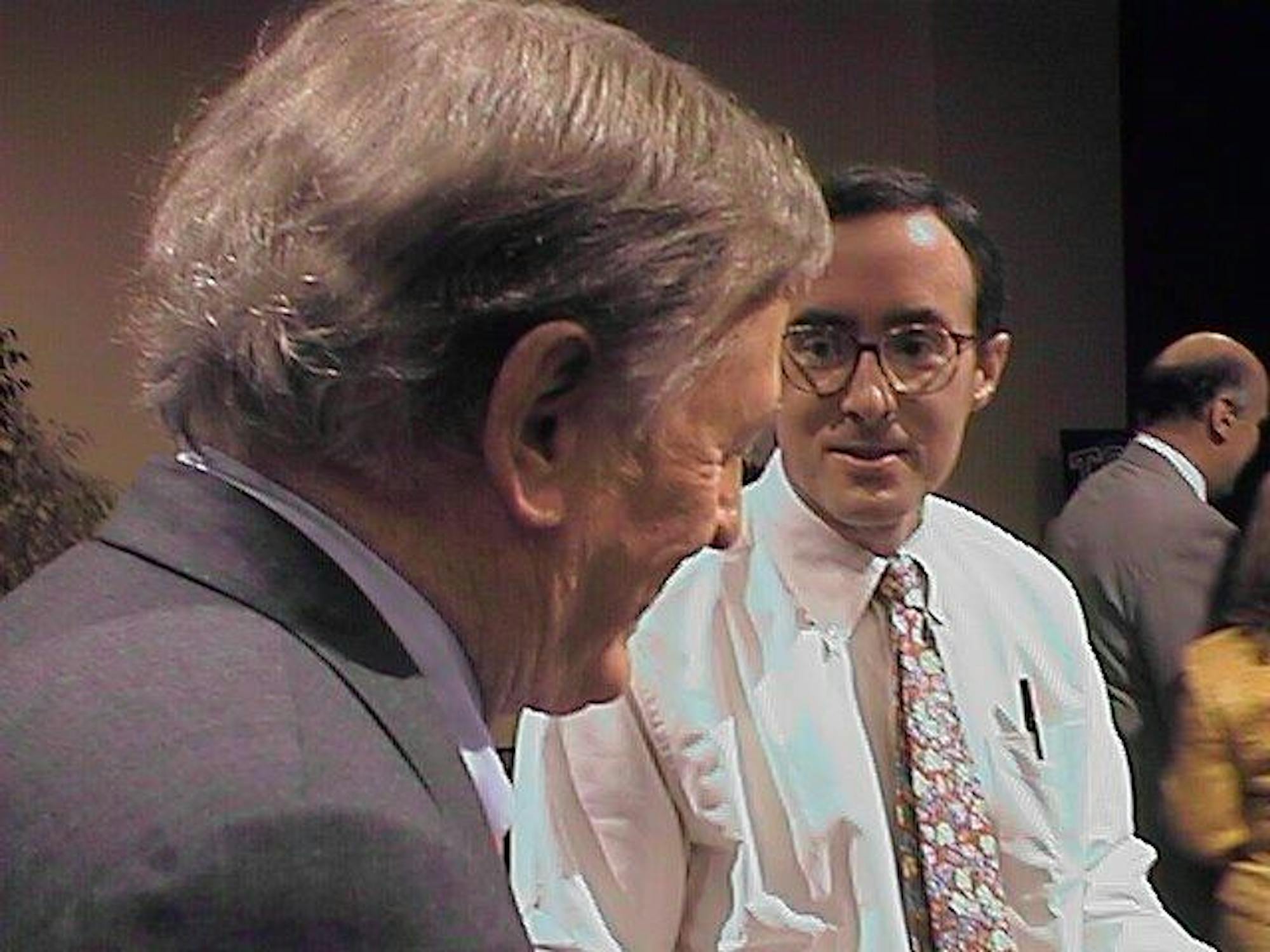
In a conversation here with William F. Buckley is the moderator for the “Firing Line” debates, Michael Kinsley, who was also a co-host on CNN's “Crossfire”, with Pat Buchanan. During his time with “Firing Line”, he became the founding editor of Microsoft's online journal, "Slate". We talked often about web pages as I was the webmaster of the South Carolina state government’s web page. Later after our time on “Firing Line”, he became the editorial page editor for the Los Angeles Times.
I continued my involvement with the “Firing Line” debates until Mr. Buckley’s retirement from television in 1999. That last show was at the Cooper Union in NYC and was the only time I’ve ever been in the City at Christmas Time. The city transformed and I was able to see the wonderful Christmas window displays all the way from Macy’s to Rockefeller Plaza. I was even able to stand on the edge of the ice on the skating rink and touch the Rockefeller Plaza Christmas Tree. Yes, back then you could actually stand under the tree. Magical!
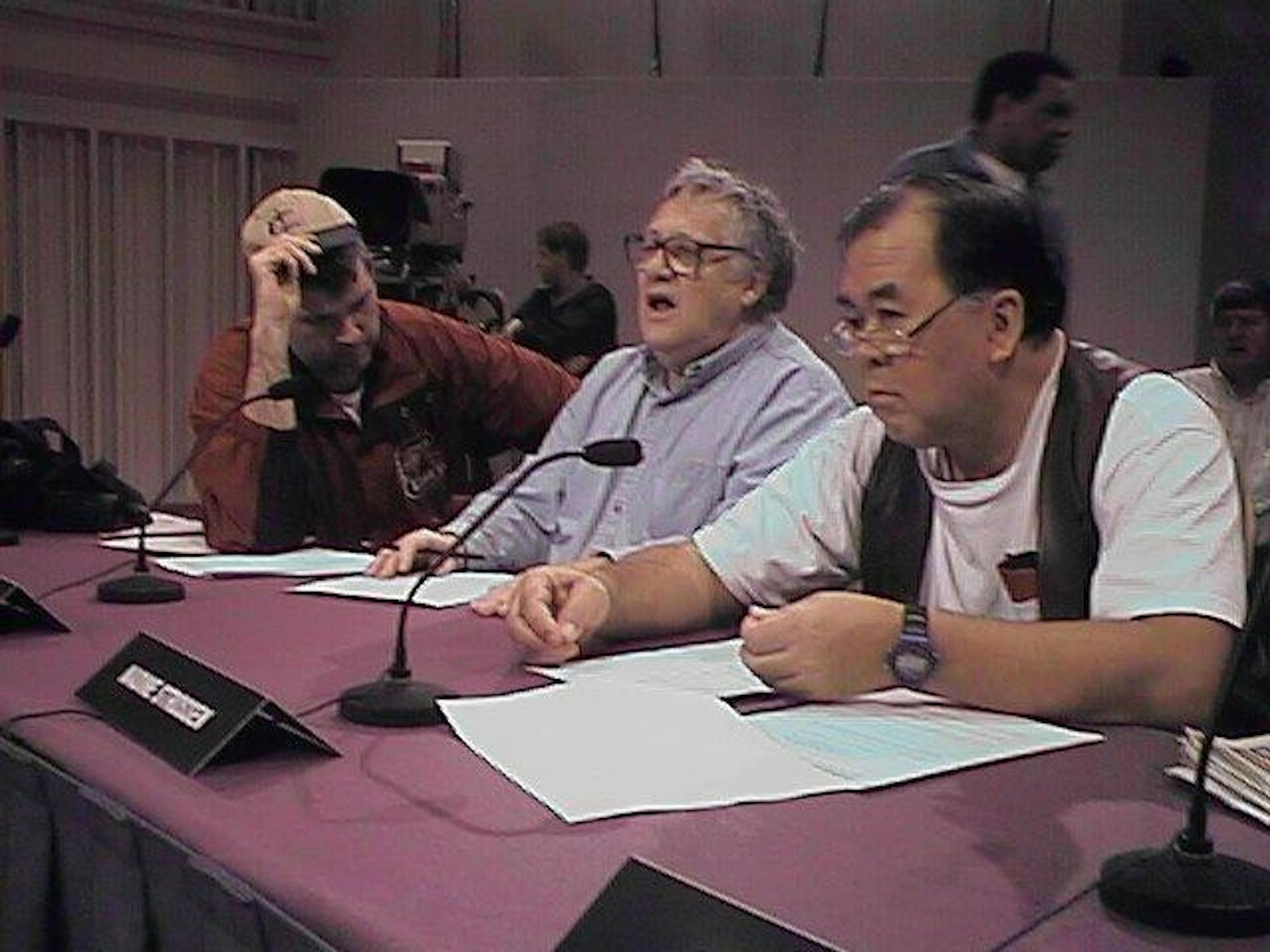
After the "Firing Line" show closed, Warren Steibel (shown in the center of this picture) asked me to run the countdown clock on a short-lived PBS show called “Debates, Debates”. It was taped once a month at HBO Studios in the Chelsea neighborhood. In order to decrease time away from work, I would catch the 6 a.m. direct Delta flight from Columbia to LaGuardia, taxi into the city, do the show and then catch the 11 p.m. direct flight from LaGuardia back to Columbia. One day, my flight from Columbia was cancelled due to heavy fog in NYC and Warren had to time the debate with no count-down clock. Warren was a very experienced producer and could easily handle debates with smaller teams without me, so in February of 2000, my broadcast career took a break of 7 years.

I was born in a great radio town, Jacksonville, FL. So it was only natural that I joined WUSC (AM at the time) in my first semester in 1963. I went on to a career in commercial radio and television in Columbia, working with WCOS-AM & FM, WIS-TV, WIS Radio, SCETV and PBS. I'm retired now, giving back since 2010 to the station that started my career, WUSC-FM. If you did the math, you would know that I celebrated the 60th anniversary of my first radio show ever in November 2023.